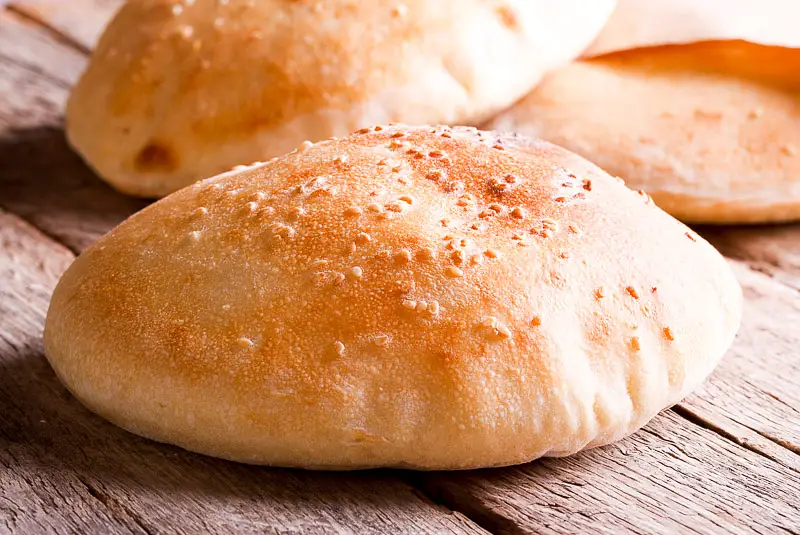
Pita Bread

Submitted by mimmy
Authentic Middle Eastern pita bread with tender pockets perfect for stuffing. This dough can be made ahead and refrigerated for up to a week of fresh-baked flatbreads.
YIELD
16 servingsPREP
30 minCOOK
30 minREADY
3 hrsMaster this recipe once and you’ll have warm, pillowy pita on demand for the next week.
The genius here is the make-ahead dough that actually improves over time in the refrigerator, developing a subtle fermented tang that deepens the flavor. Mix whole wheat and white flours for structure and nuttiness, let the dough rise, then portion only what you need while keeping the rest chilled for later.
Bake on preheated baking stones or tiles for intense bottom heat that creates those dramatic puffs and signature pockets.
Pro Tips
- The 10-minute rest after dissolving yeast (called a sponge) gives you better rise and flavor
- Knead for the full 8-10 minutes to develop gluten; this ensures pitas that puff reliably
- Store refrigerated dough in a bag three times its size so it has room to expand
- Bring dough to room temperature before rolling and baking for best results
- Unglazed quarry tiles or a baking stone are worth the investment for authentic texture
Ingredients
Directions
You will need a large bread bowl, a rolling pin, and unglazed quarry tiles or several baking sheets, or alternatively a castiron or other heavy skillet or griddle at least 9 inches in diameter.
Sprinkle the yeast over the warm water in a large bread bowl.
Stir to dissolve. Add whole wheat flour, one cup at a time, then 1 cup white flour.
Stir 100 times (one minute) in the same direction to activate the gluten in the flour.
Let this sponge rest for at least 10 minutes or as long as 2 hours.
Sprinkle salt over the sponge and stir in the olive oil.
Mix well. Add white flour, one cup at a time.
When the dough is too stiff to stir, turn it out onto a lightly floured bread board and knead for 8 to 10 minutes, until dough is smooth and elastic.
Return the dough to a lightly oiled bread bowl and cover with plastic wrap.
Let rise until at least double in size, approximately 1½ hours.
Gently punch down.
Dough can be made ahead to this point and then stored, covered, in the refrigerator for 5 days or less.
If at this time you want to save the dough in the refrigerator for baking later, simply wrap it in a plastic bag that is at least three times the size of the dough, pull the bag together, and secure it just at the opening of the bag.
This will give the dough a chance to expand when it is in the refrigerator (which it will do).
From day to day, simply cut off the amount of dough you need and keep the rest in the refrigerator, for up to one week.
The dough will smell slightly fermented after a few days, but this simply improves the taste of the bread.
Dough should be brought to room temperature before baking.
This amount of dough will make approximately 16 pitas if rolled out into circles approximately 8 to 9 inches in diameter and less than ¼ inch thick.
You can also of course make smaller breads.
Size and shape all depend on you, but for breads of this dimension the following baking tips apply:
Place unglazed quarry tiles, or a large baking stone or two baking sheets, on a rack in the bottom third of your oven, leaving a one inch gap all around to

Comments


